

 LinkedIn
A page can rank well on Google and still be absent from its AI answer. That gap is the story of Google’s generative search: from the roomy source cards of SGE to answers that pull out specific claims while ads compete for the same screen.
I spent years managing Google Ads accounts spreadsheet by spreadsheet. The useful lesson was to watch what changed in the search results, not just what a launch post promised. Read Google’s AI search changes in order and the direction is hard to miss: a ranking is no longer the prize by itself; being a source the answer can use is.
That does not mean stuffing every page with short sentences. It means making your best answer easy to find, precise enough to extract, and worth attributing before the reader’s attention moves to a paid placement. Here is how that pressure built.
May 2023: SGE Makes Sources Visible, but Separate From the Answer
On May 10, 2023, Google introduced the Search Generative Experience in Search Labs. It was an opt-in experiment, not the default search experience. Its desktop layout put a wide generated answer beside prominent source cards, or stacked those cards near the answer. A site could appear to have a substantial place in the new interface simply because its card was easy to see.
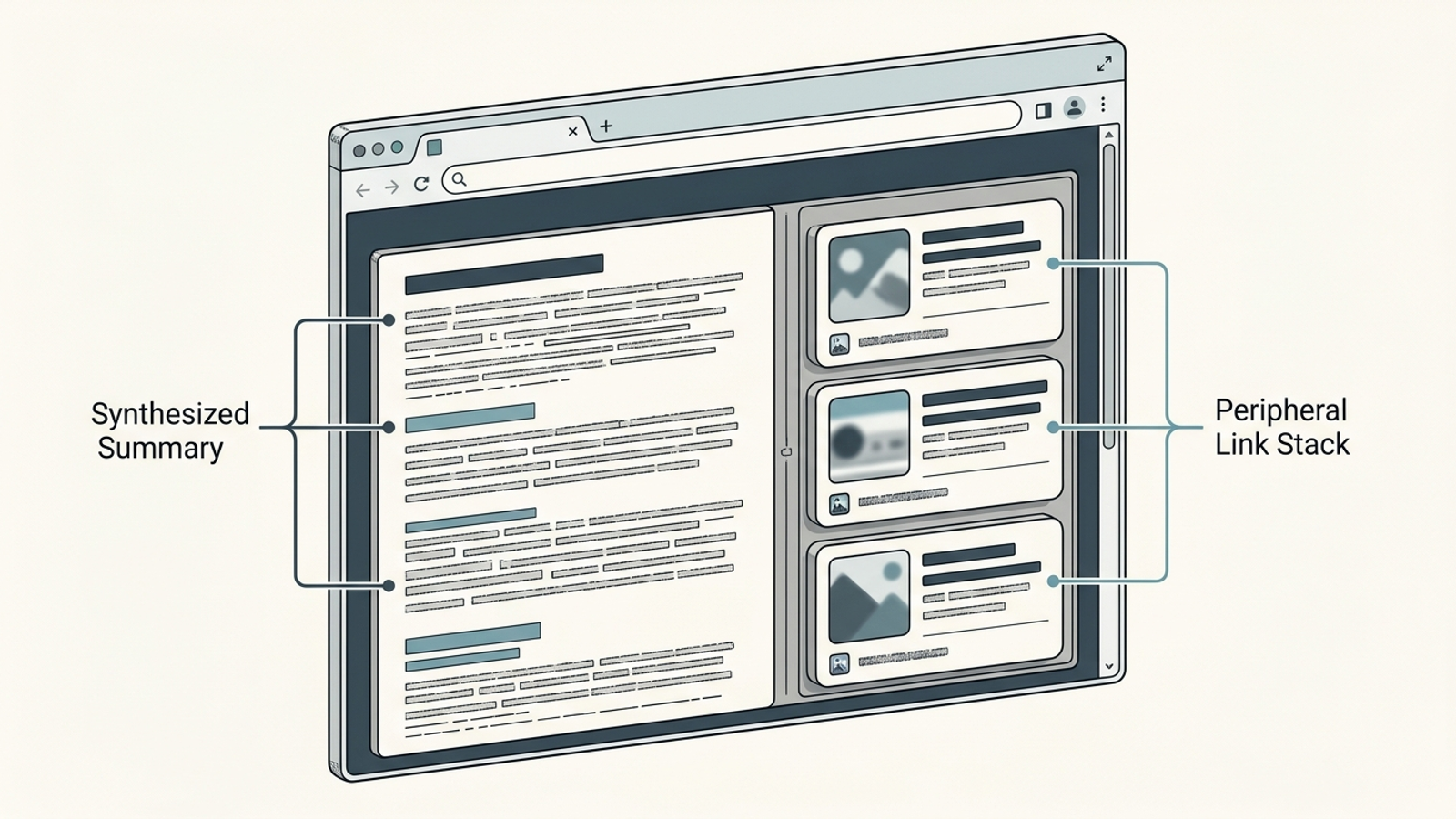
The design encouraged a comfortable assumption: keep winning conventional organic rankings and the new box will send traffic your way too. Agencies could point to a familiar-looking source card and carry on recommending backlinks, long articles, and head-term rankings as though little had changed.
But a card alongside a summary was not the same thing as a link attached to a particular claim. The answer and its apparent sources were visually associated without giving the reader a clear way to tell which page supported which sentence. For practitioners, that distinction mattered more than the size of the card. SGE made citation visibility look like an extension of ranking, while leaving the rules for earning a place in the answer unsettled.
The practical mistake was to treat an experimental layout as a durable distribution channel. A screenshot could show where a link sat that week. It could not establish that a page-one position would keep that link there when Google changed how the answer displayed its sources.
May 2024: AI Overviews Reach the Public and Expose a Source Problem
On May 14, 2024, Google launched AI Overviews beyond Labs to hundreds of millions of US searchers. Google described a custom Gemini model capable of more involved reasoning and said visits from AI Overviews were “higher quality” because those visitors spent more time on destination pages. The product was no longer a curiosity for people who had switched on an experiment. Its source choices now had wider consequences.
Within days, widely shared answers showed why attaching a source to generated text was not enough. One drew on an old Reddit joke about putting glue on pizza; another repeated a claim about eating rocks from The Onion. The problem was not that the pages were impossible to retrieve. It was that material suitable for a joke could become advice when lifted into an answer without its context.
On May 30, Elizabeth Reid published AI Overviews: About last week. Google said it had made more than a dozen technical improvements, including changes aimed at nonsensical queries and satirical or humorous content. That response did not establish a universal ban on forums or conversational writing. It did show that appearing on the web, and even appearing prominently, was not sufficient reason for Google to put a claim into an AI answer.
This broke an emerging shortcut. Seeding a forum with brand mentions might make a brand visible in a discussion; it would not make a claim reliable merely by placing it near other opinions. Nor would a polished company page become useful if its claims were too vague to check. The May lesson was about context and clarity, not a magic preference for one kind of website. State what you know directly. Make it possible to tell where a factual statement comes from and what it actually applies to.
For anyone still measuring only whether a URL held a familiar ranking, this was a warning. The question had shifted from “Can Google find my page?” to “Can Google use this passage without getting the answer wrong?”
October 3, 2024: Ads Enter the AI Overview Canvas
On October 3, 2024, Google said ads would appear in and around AI Overviews on mobile in the United States. The commercial implication was straightforward. A generated answer was not just a new place to seek an organic citation; it was becoming a place where an advertiser could also reach the same searcher.
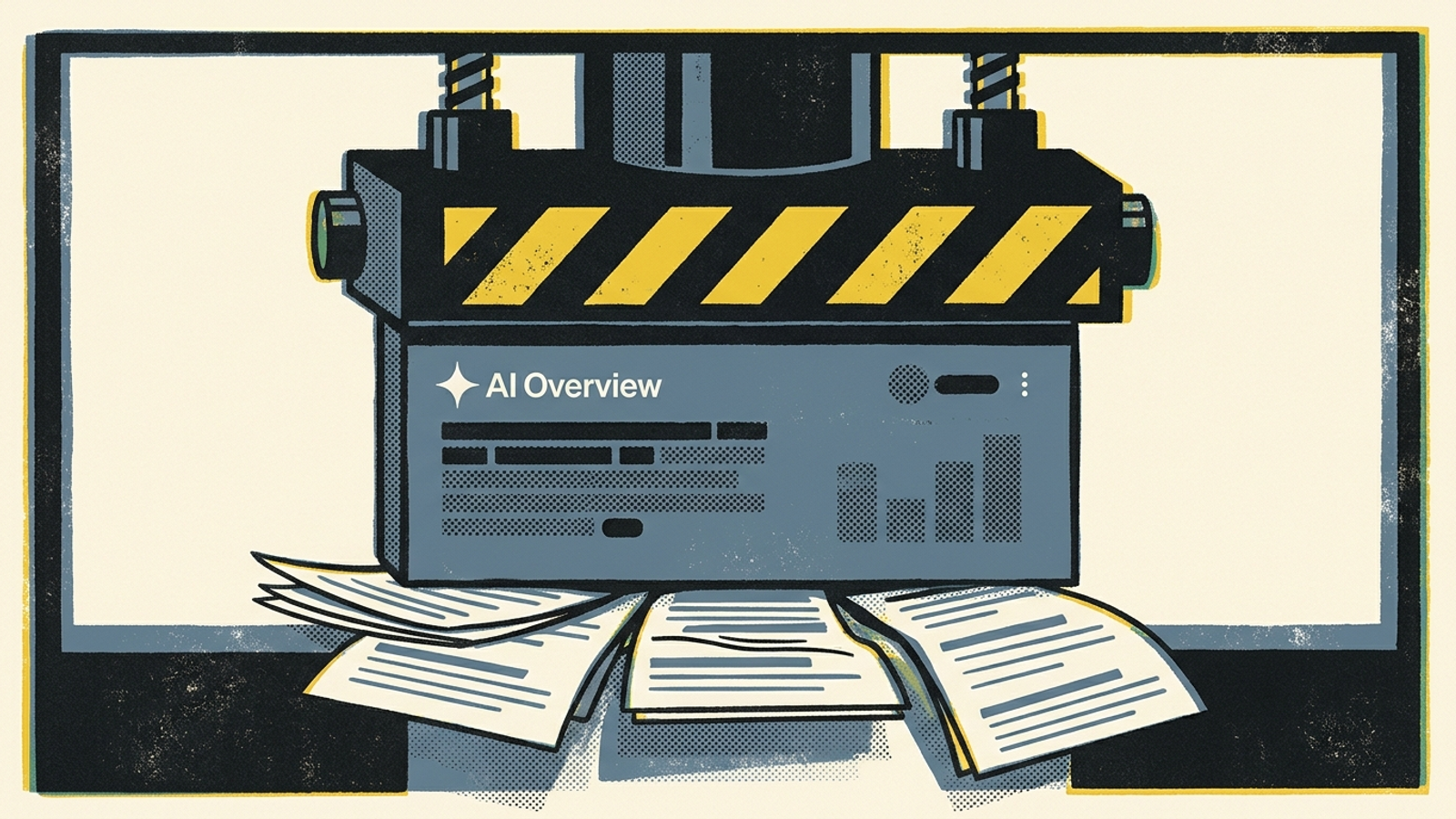
Google presented the placements as a way to connect people with relevant products and businesses. From an operator’s desk, they also changed the calculation for commercial queries. A cited page could still matter, but the citation now had to compete for attention with paid units inside an already crowded answer. The exact layout could vary; the constraint did not. Organic visibility and paid visibility were now competing within the AI experience itself.
That does not mean every business should buy its way into every query. It means an organic-only report can no longer describe the whole opportunity. If an answer covers the buyer’s question and an ad takes a prominent position beside it, a page-one organic ranking farther down the results tells only part of the story.
October 28, 2024: Links Move Closer to the Claims They Support
Later that month, Google expanded AI Overviews to more than 100 countries and described changes to how links appeared in the experience. The important direction for publishers was toward making sources accessible from the answer, rather than relying on a large source card to do all the work of attribution.
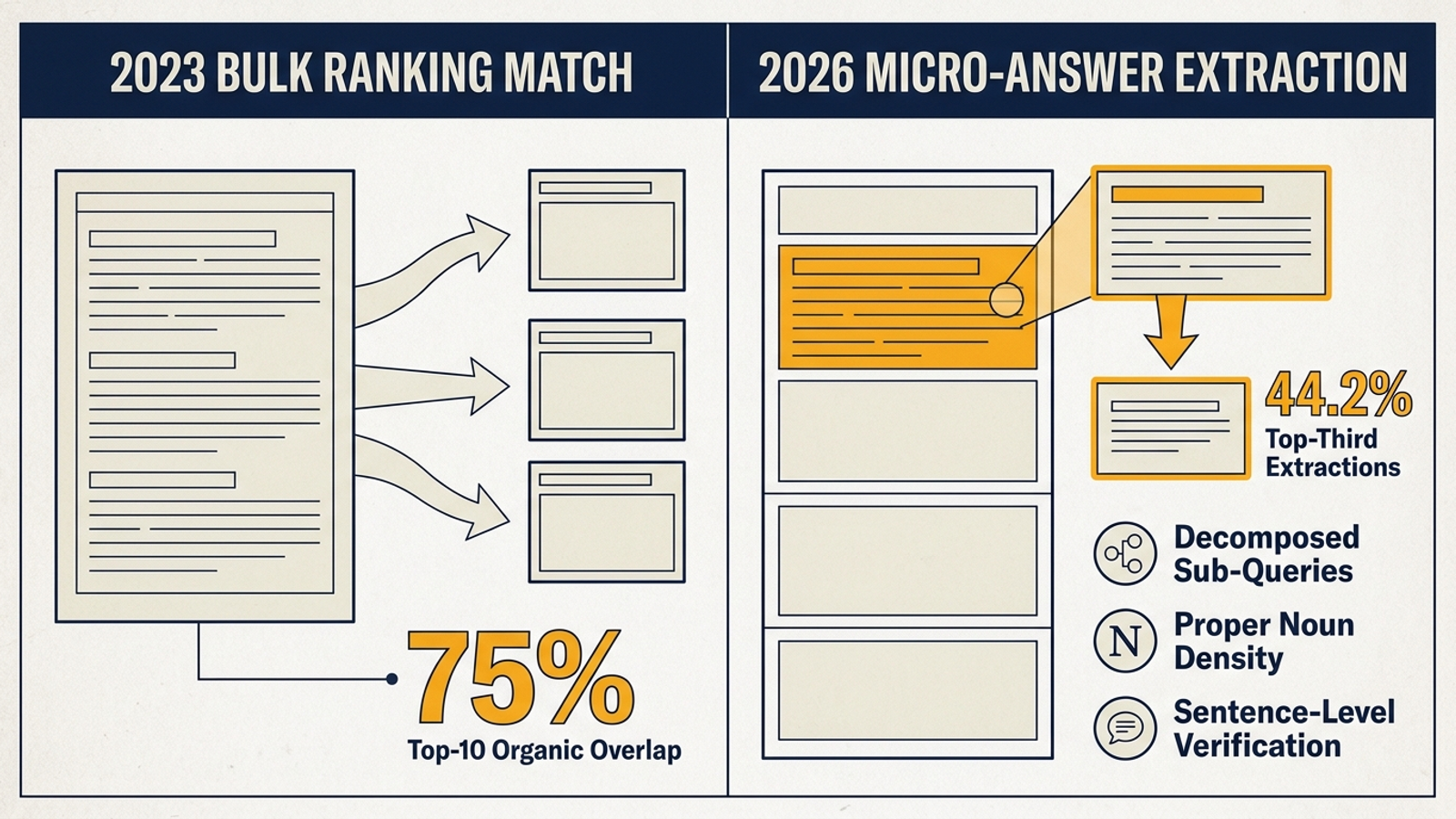
That direction raised the value of a passage that could stand on its own. A broad article about a topic might be relevant, yet still make a poor source for a sentence about a particular specification, cost, or condition. A concise passage that names the subject and states the condition gives the answer something more usable. Google did not publish a rule requiring a twenty-word sentence in the top third of every page, and treating that as a requirement would be another screenshot-era mistake.
Here is the distinction I would make for a client: topical authority helps Google find you; a clear, attributable answer gives it a reason to cite you. The two can work together, but they are not interchangeable. A long introduction about why a topic matters may serve a human reader. It should not force either a human or a retrieval system to hunt for the answer the page promises.
By this point, the squeeze had two sides. The source link needed to earn its place near a specific answer, and paid placements had entered the same visual space. Publishing more words was not a response to either problem. Publishing the useful part sooner was.
May 2025: AI Mode Makes the Head Term a Poor Map of the Answer
On May 20, 2025, Google introduced AI Mode and described its query fan-out approach. Rather than handle a complex prompt only as one keyword string, the system can pursue related subtopics to assemble an answer. A question about commercial solar leasing for warehouses, for example, could require information about lease terms, roof requirements, and utility costs. A page does not have to be the broadest page about “commercial solar” to be useful on one of those points.
That mechanism challenges a habit I recognize from paid search: reducing a buyer’s question to the head term in a spreadsheet. Head terms are easy to track. They are not always a good account of what a person needs to decide, or of the smaller questions an AI answer may try to resolve.
An Ahrefs analysis of 863,000 search results pages and four million AI Overview citations found that 37.9% of cited URLs ranked in the organic top 10 for the original query. Another 31.2% ranked from positions 11 to 100, and 31.0% ranked beyond position 100 or had no organic ranking for that query. Those figures describe AI Overview citations, not a measured citation rate for AI Mode. They still make the ranking point plainly: holding page one for the user’s exact wording does not account for every source an AI answer may use.
AI Mode also intensifies the attention problem. A Semrush analysis put desktop zero-click rates for sessions involving AI Mode responses between 92% and 94%. Search Engine Land reported that conversational queries run nearly three times longer than standard searches. Those measures do not tell an individual business what its next visitor will do, but they explain why “we rank for the main keyword” is a thin comfort when the user can keep asking questions without opening a page.
The operator’s takeaway is specific: map the sub-questions your buyer needs answered, then make each answer easy to identify and attribute. Do not bury a useful specification halfway through an article built to rank for a broader phrase. And do not mistake an appearance in an answer for a visit, or a visit for revenue.
Present: Build Pages That Can Be Quoted, Then Watch the Whole Search Result
The sequence does not end with a tidy new set of ranking factors. It ends with a different operating problem. Early SGE gave sources conspicuous cards. AI Overviews brought answers to a much larger audience and exposed the cost of taking source material out of context. Ads entered the answer space. AI Mode made a single tracked keyword an even poorer description of the questions being answered.
There is another reason not to turn this into a universal “AI citation” checklist. Search interfaces do not necessarily choose the same sources. One citation-source comparison found only 11% of domains appeared in both ChatGPT and Perplexity citations. That does not tell you precisely how either system will handle your next page. It does tell you that a win in one interface is not a distribution plan for every other one.
For Google, I would work in this order:
- List the questions behind the head term. Take the buyer’s broad query and write down the narrower decisions it contains. For commercial HVAC maintenance, that might mean questions about seasonal COP ratings, duct retrofit costs, and warranty transfer terms. The point is not to invent answers to those questions. It is to identify which ones your business can answer accurately.
- Put the usable answer where a reader can find it. Lead the relevant passage with the subject, the verified detail, and any condition that changes its meaning. Cut the introduction that delays those facts. If you cannot support a numeric claim, do not dress it up in firmer syntax and hope a model quotes it.
- Measure the answer and the auction together. Check where your pages are cited, where competitors are cited, and whether ads occupy the commercial space around those answers. Then connect that visibility to the outcomes that matter to the business. A citation with no qualified traffic is not a victory; a click that never becomes pipeline is not one either.
Tools can show where a competitor appears while you do not. As I argued in this look at software that monitors AI Overview visibility, that report is a task list, not the completed work. It does not revise an unclear page or manage the paid-search response. A monthly meeting devoted to admiring the task list is an expensive way to stay behind.
That is the operational case for groas: an autonomous growth engine that works across paid and organic search, with specialized AI models handling ongoing execution and a human strategist setting direction and guardrails. It does not make every page quotable by decree, and no platform can promise a citation. It does address the pace of a search result that changes across answers, source links, and ads while most teams are still preparing the next review deck.
The line from SGE to AI Mode points away from owning a ranking and toward earning a place in the answer. Make the page worth quoting. Then keep watching what shares the screen with the quote.